Deep Sea's Hidden Family Tree
Scientists just discovered 24 new species and an entirely new branch of life in the Pacific's mysterious depths
Dr. Sarah Chen
Author
March 26, 2026
Published
4 min read
Reading time
6 views
Total views
Deep Sea's Hidden Family Tree
Imagine exploring a forest where 90% of the trees have never been named. Now imagine that forest is at the bottom of the Pacific Ocean, under crushing pressure and total darkness. That's exactly what scientists just did — and they found something extraordinary.
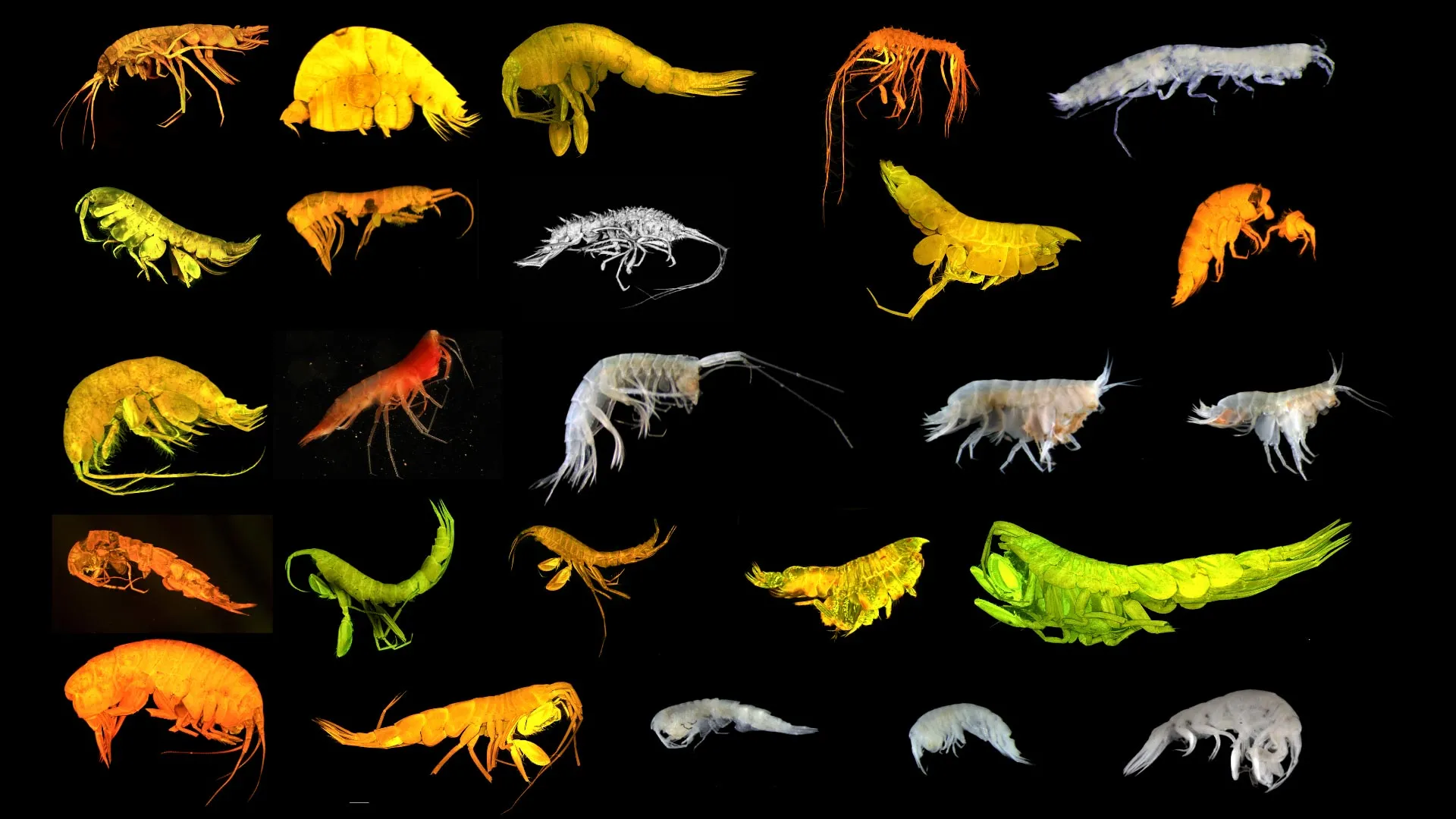
In a discovery that's rewriting what we know about life on Earth, researchers have identified 24 brand new species of deep-sea creatures, including something even rarer: an entirely new branch of the evolutionary tree.
The Ocean's Secret Garden
Picture this: a vast underwater wilderness stretching from Hawaii to Mexico, covering six million square kilometers — that's larger than the entire Amazon rainforest. This is the Clarion-Clipperton Zone (CCZ), one of the most mysterious places on our planet.
Until now, we've known more about the surface of Mars than about what lives in these deep-sea plains. But a team of 16 scientists from around the world just spent a week in Poland doing something remarkable: they named the nameless.
Dr. Tammy Horton, one of the lead researchers, puts it perfectly: "To find a new superfamily is incredibly exciting, and very rarely happens. This is a discovery we will all remember."
Meet the New Family on the Block
So what exactly did they find? Meet the amphipods — tiny crustaceans that are like the ocean's cleanup crew. Some are predators, some are scavengers, but all play crucial roles in keeping the deep sea healthy.
The star of the show is Mirabestioidea, a completely new superfamily. Think of it like discovering that dogs aren't just a new breed — they're part of a whole new category of mammals that nobody knew existed.
Along with this new superfamily comes a new family (Mirabestiidae) and two new genera. Scientists also broke depth records, finding some species living deeper than any of their relatives ever recorded.
Why This Discovery Matters Right Now
Here's the twist: the CCZ isn't just a scientific curiosity. It's ground zero for a coming battle over deep-sea mining. The ocean floor here contains valuable minerals like manganese nodules — and mining companies are already eyeing them.
But here's what we didn't know: this area is teeming with life we've never even named. More than 90% of species in the CCZ are still unknown to science. We're literally about to bulldoze a rainforest before we've even counted the trees.
Anna Jażdżewska, the other lead researcher, explains why this work is urgent: "Our findings provide information that's crucial for future conservation and policy decisions. We need to know what lives here before we decide what to destroy."
The Human Stories Behind the Science
Science isn't just about data — it's about people. And the naming of these new species tells beautiful human stories.
Dr. Horton named one species Mirabestia maisie after her daughter, who had been waiting years to join her siblings in having a species named in her honor.
Another species, Pseudolepechinella apricity, gets its name from a beautiful word meaning "the feeling of the warmth of the winter sun." Dr. Horton chose it because it captured the warmth of friendship that developed during their snowy Polish workshop.
There's even a video game connection: Lepidepecreum myla is named after a game character because, as the researcher noted, both are "just little arthropods trying to survive in total darkness."
The Race Against Time
This discovery is part of a global effort called the "One Thousand Reasons" project, which aims to describe 1,000 new deep-sea species by 2030. At their current pace of about 25 species per year, scientists believe they could catalog nearly all the amphipods in the eastern CCZ within a decade.
But here's the catch: deep-sea mining could start much sooner. The clock is ticking to understand what we might lose forever.
What This Means for All of Us
Every time we discover a new branch on life's family tree, we're reminded of how little we truly know about our own planet. These tiny creatures in the dark ocean depths aren't just scientific curiosities — they're part of Earth's life support system.
They recycle nutrients, clean up waste, and form the foundation of deep-sea food webs. Lose them, and we risk unraveling ecosystems we don't even understand yet.
As Dr. Horton puts it: "Each species described is a vital step toward improving our understanding of this fascinating ecosystem. Describing what lives here enables us to communicate effectively about what we might lose."
So the next time you look at the ocean, remember: beneath those waves lies a world more alien than science fiction, filled with life forms we're only just beginning to meet. And every new discovery reminds us that our planet still holds wonders beyond our wildest imagination.